The battery in your smartphone, EV, or smartwatch is quietly destroying the planet. Lithium mining devastates ecosystems, cobalt extraction fuels ethical nightmares, and 97% of coin-cell batteries end up in landfills leaching toxins.
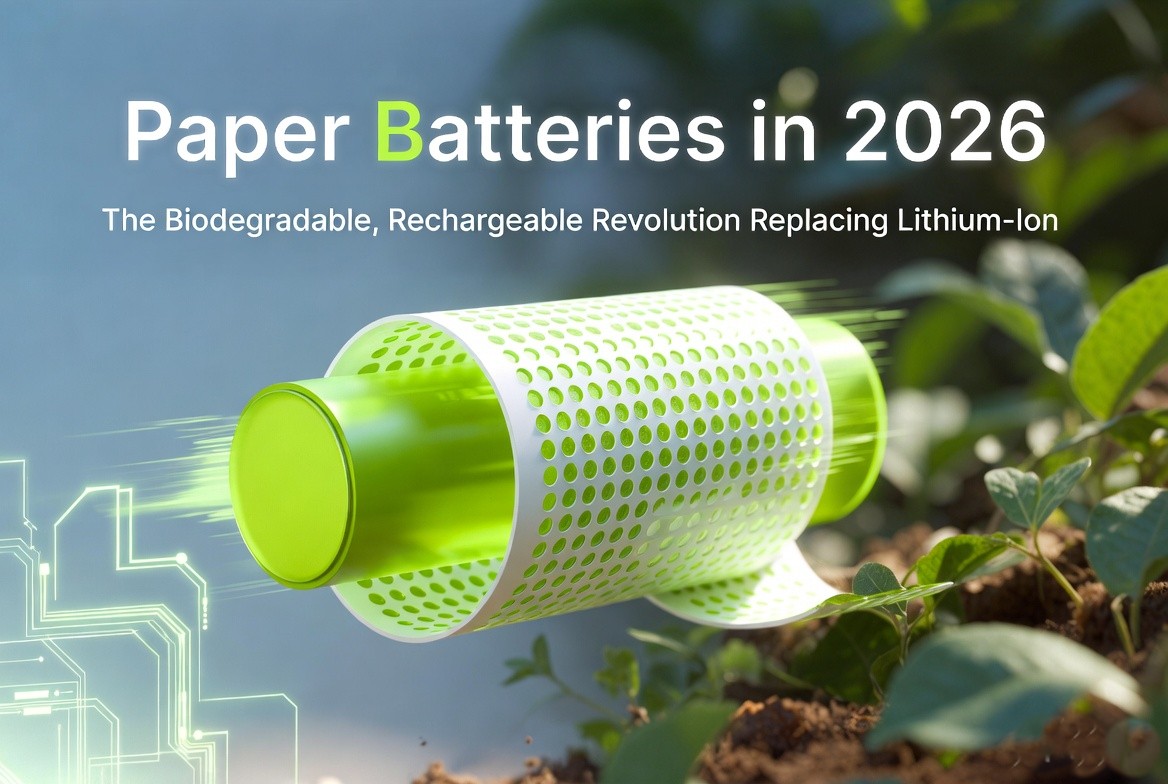
Enter paper batteries—thin, flexible, compostable power sources made from plant cellulose that are now in commercial production. In January 2026, Singapore-based Flint Labs began scaled manufacturing of rechargeable paper batteries with performance rivaling lithium-ion but zero toxic metals and full soil biodegradation in just 4–6 weeks.
This isn’t sci-fi. It’s here. In this ultimate 2026 guide, we break down exactly what paper batteries are, how they work, who’s leading the charge, and why they could end our lithium addiction. (Paper Batteries – CNET)
What Is a Paper Battery?
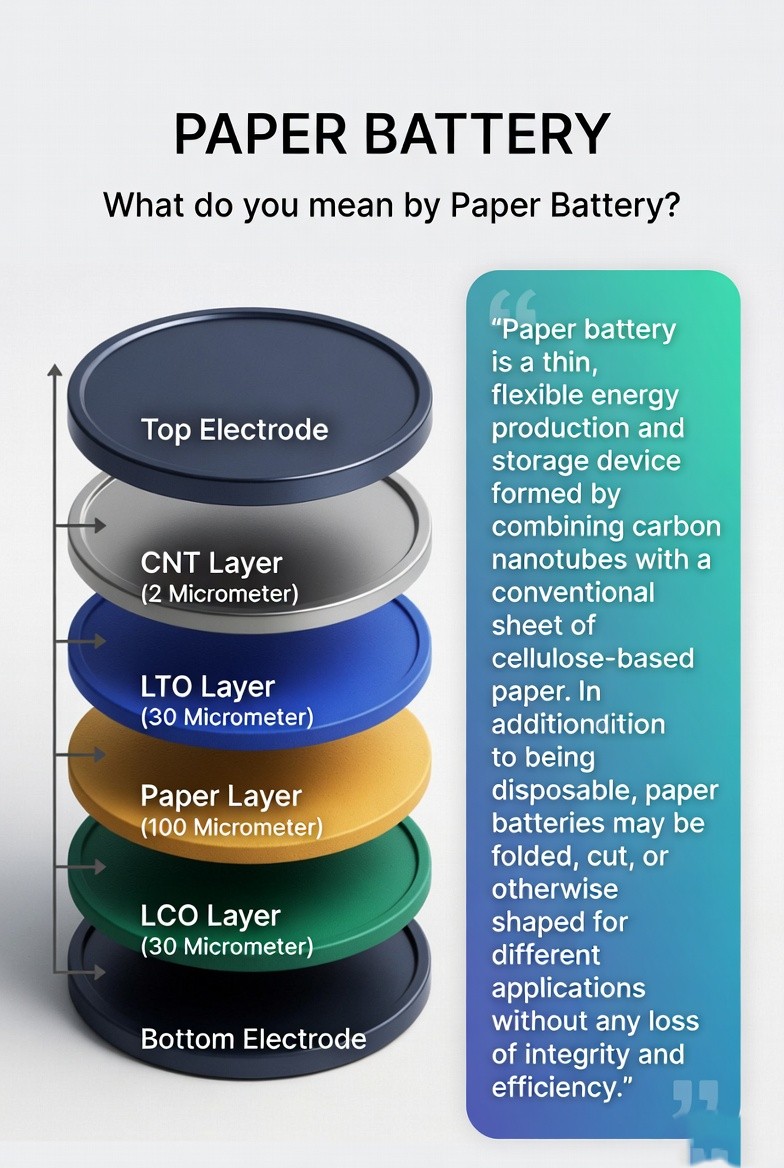
A paper battery is a thin, flexible energy storage device that uses cellulose (the main component of ordinary paper) as its structural backbone instead of rigid metal casings or toxic separators.
It combines:
- Electrodes made from carbon nanotubes, zinc, manganese, or conductive inks
- Electrolyte that can be water-based, ionic liquid, or enzyme-activated sugar
- Separator that is the paper itself (porous cellulose)
The result? A battery that is:
- Ultra-thin (often <1mm)
- Flexible (bend, fold, cut, or shape it)
- Biodegradable or compostable
- Non-corrosive and leak-proof
Unlike traditional batteries, paper batteries integrate everything into a single composite sheet—no bulky housing required.
A Brief History and Evolution
- 2007: Rensselaer Polytechnic Institute creates the first “paper battery” using carbon nanotubes on cellulose.
- 2010: Stanford develops flexible lithium-ion paper batteries that can be rolled like a scroll.
- 2022: Swiss researchers unveil water-activated disposable paper batteries for single-use medical devices.
- 2025–2026: Game-changer era. Flint Labs and France’s BeFC move from prototypes to production.
How Paper Batteries Work (Simple + Technical Breakdown)
Paper batteries operate on the same electrochemical principle as any battery—electrons flow from anode to cathode through an external circuit while ions move internally.
Key innovation: Cellulose paper acts as both separator and ion-transport medium via capillary action (like a sponge).
Flint’s Rechargeable Version (2026):
- Anode: Zinc
- Cathode: Manganese
- Electrolyte: Water-based hydrogel
- Separator: Cellulose paper
- Ions shuttle through the porous paper structure during charge/discharge.
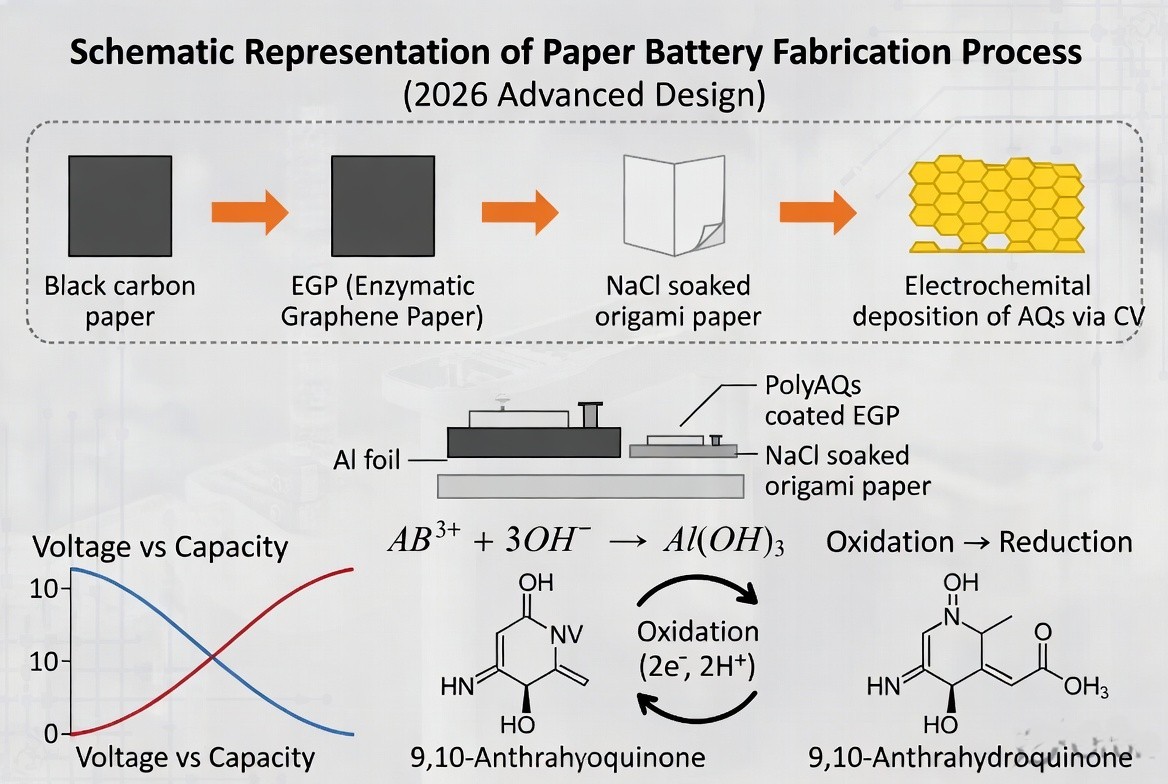
BeFC’s Bioenzymatic Version: Enzymes break down sugar (glucose) + oxygen from air to generate electricity—essentially a tiny biofuel cell printed on paper. No metals.
Electrochemical process in advanced paper-based designs.
Types of Paper Batteries in 2026
| Type | Rechargeable? | Lifespan | Best For | Key Players |
|---|---|---|---|---|
| Water-activated | No | Hours–days | Single-use medical/IoT | EPFL prototypes |
| Bioenzymatic (sugar) | No | Days–weeks | Diagnostics, packaging | BeFC (France) |
| Rechargeable Cellulose | Yes | Comparable to Li-ion | Consumer electronics, wearables, potential EVs | Flint Labs (Singapore) |
Leading Companies & 2026 Breakthroughs
Flint Labs (Singapore) – The 2026 Star
- Production live in Singapore facility (January 2026).
- Energy density: 226 Wh/kg (matches many lithium-ion packs).
- Biodegrades in soil in 4–6 weeks.
- Non-flammable, non-toxic, cuttable (still powers a fan when sliced).
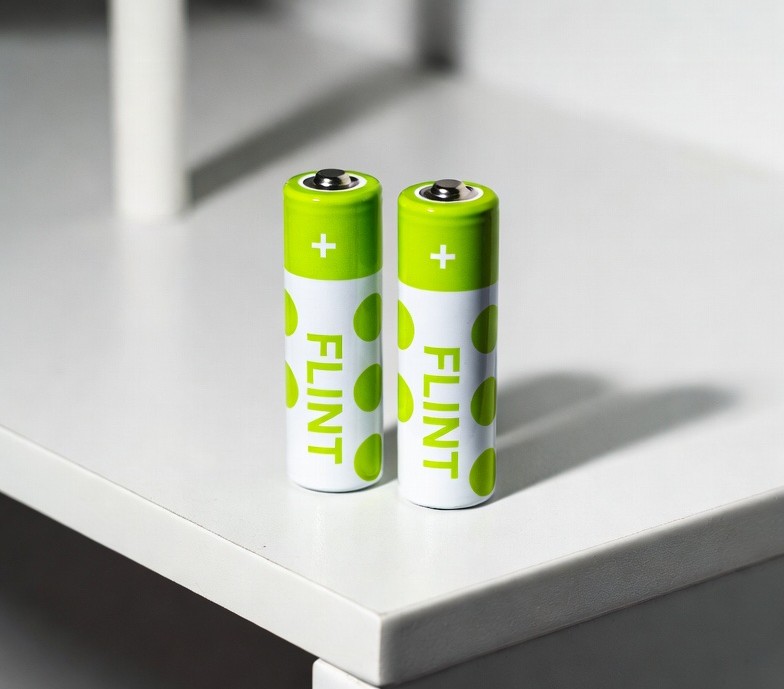
- First products: AA/AAA-style cells expected late 2026; pilots with Logitech, Amazon, Nimble.
BeFC (France) –
Perfect for Low-Power Eco-Devices Metal-free biofuel cells already shipping for smart packaging and medical diagnostics.
Advantages vs Disadvantages (2026 Reality Check)
Advantages:
- Fully compostable/biodegradable
- Extremely safe (no fire/explosion risk)
- Flexible and integrable into any shape
- Uses abundant, cheap materials (no lithium/cobalt)
- Lower carbon footprint
- Works in extreme temperatures
Disadvantages (mostly solved or minor):
- Early scaling costs (rapidly dropping)
- Some variants have lower power density than premium Li-ion
- Still needs protection from extreme moisture during use
Paper Battery vs Lithium-Ion: Head-to-Head (2026)
| Feature | Paper Battery (Flint) | Lithium-Ion | Winner |
|---|---|---|---|
| Energy Density | 226 Wh/kg | 150–300 Wh/kg | Tie |
| Safety | Non-flammable, cuttable | Fire/explosion risk | Paper |
| End-of-Life | Compostable in 4–6 weeks | Recycling ~5–10% efficiency | Paper |
| Materials | Zinc, manganese, cellulose | Lithium, cobalt, nickel | Paper |
| Cost Potential | Lower (abundant materials) | High (scarce metals) | Paper |
| Flexibility | Extremely high | Rigid packs | Paper |
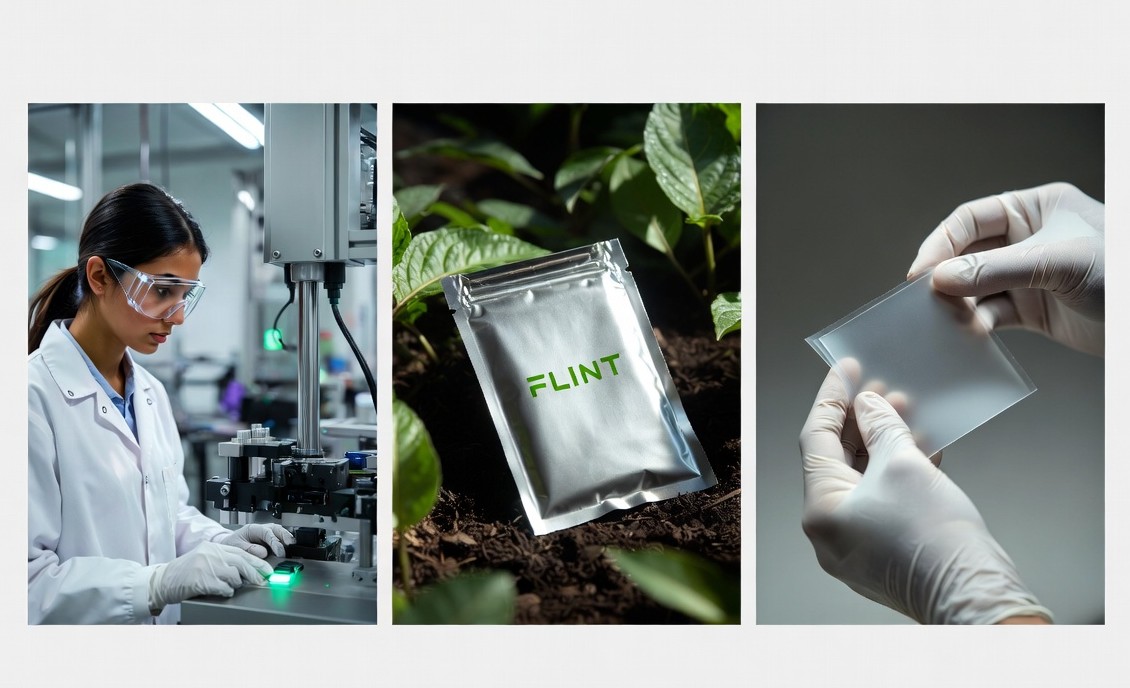
Flint Paper Battery Can be Biodegraded in 6-Weeks When Buried in Soil – TechEBlog
Real-World Applications in 2026 and Beyond
- Consumer Electronics: AA/AAA replacements, smartwatch straps, foldable phones
- IoT & Sensors: Remote environmental monitoring (no battery waste)
- Medical: Single-use diagnostics, wearable patches
- Smart Packaging & Logistics: Trackers that compost with the box
- Future: Grid storage, EVs (Flint is already eyeing larger formats)
Environmental Impact & Sustainability Edge
Traditional batteries contribute massively to e-waste and mining damage. Paper batteries close the loop—made from plants, return to soil with zero microplastics or heavy metals.
Challenges Still Ahead
- Scaling to gigafactory levels
- Proving 1,000+ cycle life in real products
- Regulatory certification for consumer use
But with production already live and major brand pilots underway, 2027 could be the breakout year.
Frequently Asked Questions
Are paper batteries real and available now?
Yes—Flint’s are in production and shipping to partners in 2026.
Can I buy paper batteries for home use?
AA/AAA versions expected later 2026; check Flint’s site for updates.
Do they perform as well as lithium-ion?
Energy density is comparable; safety and sustainability are superior.
How long until they replace lithium completely?
Niche applications first (2026–2028), then broader consumer and grid use.
The Future Is Paper-Thin
Paper batteries aren’t just an alternative—they’re a better one for a planet that can no longer afford toxic, irreplaceable metals. With Flint in production and BeFC scaling biofuel cells, 2026 marks the beginning of the end for lithium dominance in low-to-medium power applications.
The revolution is flexible, safe, and compostable. The only question left: When will your next device run on paper?
Ready to go deeper? Bookmark this guide and follow Flint Labs and BeFC for the latest pilots. The battery of tomorrow is already here.
Explore More Breakthroughs in Future Energy & Sustainable Tech
If paper batteries caught your attention, you’re just scratching the surface of what’s happening in next-generation energy and materials. These innovations are reshaping how we store, generate, and use power:
- Green Nanotechnology Explained – Discover how nanoscale materials are enabling cleaner manufacturing, smarter energy systems, and environmentally friendly innovations across industries.
- Thermal Battery: The Future of Energy Storage & Efficiency – Learn how heat-based energy storage systems could outperform traditional batteries in industrial and grid applications.
- Americium Batteries: Revolutionising Space Battery Technology – Explore the nuclear-powered batteries designed for deep-space missions and why they could outlast anything on Earth.
Each of these technologies tackles a different piece of the energy puzzle—together, they offer a glimpse into a future that is not only more efficient, but far more sustainable.